Umami in your kitchen
It is in tomatoes, cheese, fish… in many everyday foods. See where to find the fifth basic taste.

Idioma
Idioma
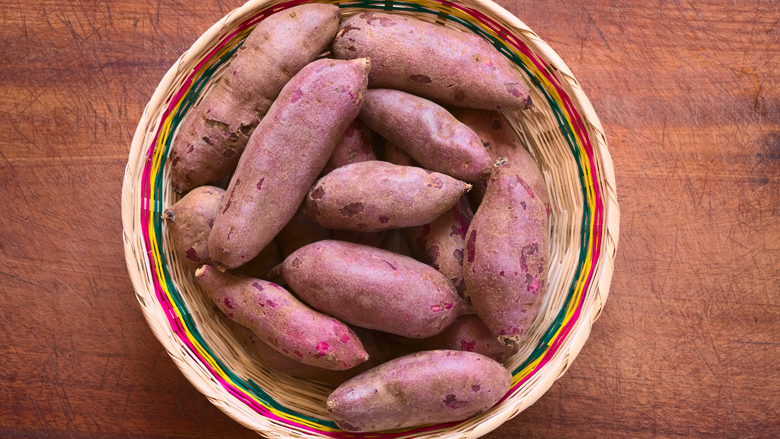
You’ve probably heard that, for weight loss, it’s preferable to consume foods like rice and flour in their whole-grain form, since they have a “low glycemic index.” Other foods, such as carrots, spinach, cabbage, tomatoes, and sweet potatoes, which have the umami taste, also belong to this category.
And what does that mean? The glycemic index (or glycemia) is an indicator of how quickly the sugar in a food enters the bloodstream after being eaten. The faster this absorption, the greater the release of insulin by the pancreas and the higher the blood sugar level.
Since each food has its own characteristics, they are classified as having a low, medium, or high glycemic index. According to Ana Prata, an entrepreneur in the food sector for physical activity practitioners, this variation depends on several factors: the type of carbohydrate (simple or complex), whether it’s consumed along with proteins, fibers, or fats, and even the method of preparation. “The same cassava, for example, in purée form, has a higher glycemic index than when boiled,” she says. In the case of fruits, even the ripeness level affects the index.
The link to weight loss is that excess sugar will be converted and stored in the body as fat. And worse: it doesn’t generate satiety, which makes your stomach “growl” again shortly after. With low glycemic index foods, the opposite effect occurs: not only do they keep hunger away for longer, but they also regulate cholesterol and triglyceride levels.
That doesn’t mean that high glycemic index foods are forbidden. According to Ana Prata, the ideal is for them to be included in the diet in the daily amounts recommended by a doctor or nutritionist. For someone with diabetes, for example, this control must be stricter. “The intake of large amounts of high glycemic index foods causes insulin spikes in our body, which leads to hypoglycemia or hyperglycemia. These fluctuations are very dangerous for diabetics,” she warns.
She notes that, for even more accurate control, it’s important to consider another concept: the glycemic load of the food. A watermelon, for example, has a relatively high glycemic index, but a low glycemic load. In other words, the carbohydrate reaches the bloodstream quickly, but the amount of sugar isn’t that high. Considering both factors provides a parameter closer to reality.
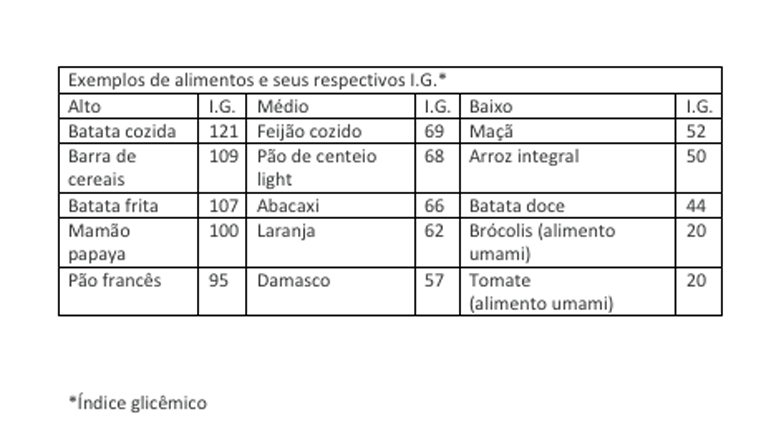
Check the table below for 5 types of foods with high, medium, and low Glycemic Index: