
Taste memory: how does umami act in the brain?
Credits: Pexels
Specialist explains how glutamate-rich foods can trigger good memories
São Paulo, April 2023 – Some foods are capable of awakening good and tasty memories, such as Sunday family lunches and other happy moments with loved ones. Known as taste memory, the nostalgic feeling it provokes has a scientific explanation.
Taste cells are responsible for identifying basic tastes and sending messages through nerve signals to the central nervous system. “The stimuli reach the brain and produce sensations such as pleasure, aversion, or memories associated with certain tastes,” suggests Food Science PhD and Umami Committee consultant, Hellen Maluly.
An example of how food flavors interact with brain functions is related to glutamic acid, also known as glutamate. “Results of a neuroscientific experiment presented at the II Latin American Congress of Sensory and Consumer Sciences – SenseLatam, showed that glutamate, naturally present in various foods or in the form of a food additive, provides the umami taste and, by activating the taste sensation, signals are sent to specific areas of the brain that are related to emotions”¹, highlights the specialist.
Glutamate is an amino acid produced by the body and is also the main substance responsible for umami taste, the fifth basic taste of the human palate, and can be found in many foods that activate taste memory, including tomato, aged cheeses, asparagus, potato, shrimp, corn, mushrooms, meats, and eggs.
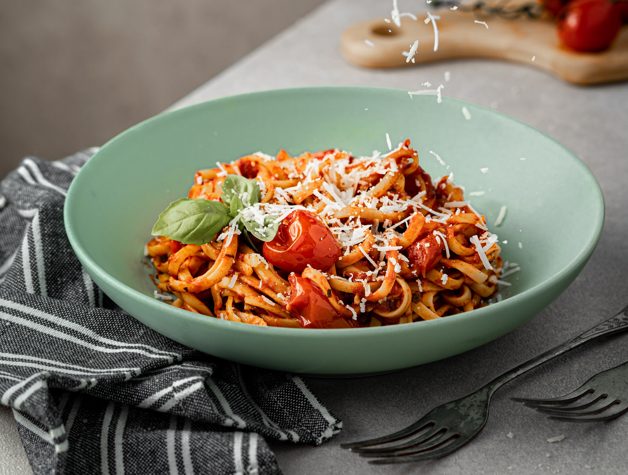
Traditional family recipes are usually made with these ingredients, for example, pasta with tomato sauce and grated parmesan cheese, mashed potato casserole with meat, stuffed mushrooms, and paella. That’s why, when eating certain dishes, we associate tastes with emotional memories.
In the study “Human taste references and adaptations”², Hellen points out that this affective memory with food awakens all the memories and stimuli received throughout life and can directly affect our choices of what we like or dislike to eat.
In addition to being delicious, meals that have the fifth taste also support taste memory. “Consuming umami-rich foods and making our diet more varied, with different tastes, aromas, colors, and textures, are ways to train our memory to recall good memories and also build new and tasty ones,” advises Hellen.
The doctor prepared a list of umami-rich foods to help stimulate taste memory.
SEAFOOD
Glutamate is found in some foods from the sea, such as kombu and nori seaweed, tuna, shrimp, bonito, and sardines.
FERMENTED FOODS AND DAIRY
The fifth taste is more intense in aged cheeses, such as parmesan, provolone, gorgonzola, gouda, among others. In breast milk, glutamate is the most abundant amino acid, making umami the first taste we perceive in life.
MEATS AND EGGS
Beef, pork, chicken, and eggs are foods that contain high-quality amino acids, and in aged meats, umami is more noticeable.
MUSHROOMS
Umami is present in the mushroom family, such as shimeji and shiitake, and is more abundant in dried versions of the foods.
LEGUMES AND VEGETABLES
Glutamic acid is found in various legumes and vegetables in different amounts, varying according to the ripening of the foods, with a tendency to increase over time. Some examples are tomato, peas, corn, potato, garlic, carrot, spinach, broccoli, and asparagus.
References:
- RODRIGUEZ, T. R.; ROCHA, B. C.; CLAUS, M. L.; MIELE, F. P.; FIALHO, N. A. V. Emotional responses on the perception of umami taste in vegetables. Paper presented at the II Latin American Congress of Sensory and Consumer Sciences – SenseLatam 2022.
- Human taste preferences and adaptations – Umami (portalumami.com.br)
UMAMI
It is the fifth basic taste of the human palate, discovered in 1908 by Japanese scientist Kikunae Ikeda. It was scientifically recognized in 2000, when researchers at the University of Miami confirmed the existence of specific receptors for this taste in the taste buds. The amino acid glutamic acid and the nucleotides inosinate and guanylate are the main umami substances. The two main characteristics of umami are increased salivation and the continuation of taste for a few minutes after food intake. To learn more, visit www.portalumami.com.br.
Taste memory: how does umami act in the brain?
-
Telephone
+55 (11) 3165-9595 / 91665-8665
-
Email
umami@fsb.com.br
Related news
- Notícia
Less Salt, More Umami: Try Flavorful Recipes with Reduced Sodium
- Notícia
Minas Gerais Cuisine: Chef Explains What Makes the Region’s Dishes So Flavorful

- Notícia
Golden August: the first strategic asset of our lives is breastfeeding.
- Notícia