
On the September 7 Holiday, Celebrate with a Tasty, Lower-Sodium Recipe | Press
São Paulo, September 2016 – September 7 is a very important date in Brazil’s history. It was on this day, in 1822, that Dom Pedro I proclaimed the famous “Cry of Ipiranga” on the banks of the river of the same name—located in central São Paulo—marking the start of the War of Independence. After three years of conflict, on August 29, 1825, Brazil declared its independence from Portugal.
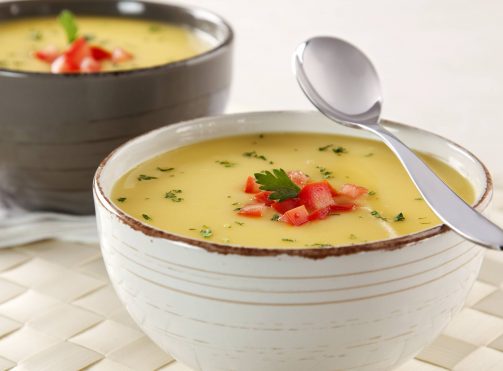
Since holidays are a time when most families get together, the Umami Committee has selected a recipe for Arracacha (Mandioquinha) Soup with reduced sodium to help you choose the menu. When you taste this dish, you can enjoy the benefits of umami taste, such as improved food acceptance, without worrying about the effects of a meal with a high sodium content.
Try the recipe:
Arracacha (Mandioquinha) Soup
Ingredients
- 1 tbsp oil
- 1 small onion, chopped (100 g)
- 4 mandioquinhas/arracachas, sliced (400 g)
- 1/2 tsp salt
- 1/2 tsp monosodium glutamate (MSG)
- 3 1/2 cups water (700 ml)
- 1 pinch black pepper
- 1 tbsp chopped parsley and scallions (cheiro-verde)
Directions
- In a large saucepan, add the oil and heat over high heat.
- Add the onion and sauté for 3 minutes, or until translucent.
- Add the arracacha, salt, and MSG, and sauté briefly.
- Add 3 cups of water and cook over high heat, covered, for 20 minutes, or until the arracacha is tender.
- Transfer to a blender and blend until smooth and creamy.
- Return to the pan, add the remaining water and the pepper, and cook for 5 more minutes, or until piping hot. Stir in the chopped herbs and remove from the heat.
- Serve immediately.
Serves: 4
Prep time: 40 minutes
Tip: Mandioquinha is also known as arracacha or Peruvian parsnip. Easy to digest, this root is highly recommended to diversify the menus of children and older adults.
For more recipes, visit: portalumami.com.br
UMAMI
It is the fifth basic taste of the human palate, discovered in 1908 by Japanese scientist Kikunae Ikeda. It was scientifically recognized in 2000, when researchers at the University of Miami confirmed the existence of specific receptors for this taste on the taste buds. The amino acid glutamic acid and the nucleotides inosinate and guanylate are the main umami substances. Umami’s two main characteristics are increased salivation and a lingering taste for a few minutes after eating. To learn more, visit portalumami.com.br.
On the September 7 Holiday, Celebrate with a Tasty, Lower-Sodium Recipe | Press
-
Telephone
+55 (11) 3165-9595 / 91665-8665
-
Email
umami@fsb.com.br
Related news
- Notícia
Minas Gerais Cuisine: Chef Explains What Makes the Region’s Dishes So Flavorful

- Notícia
Golden August: the first strategic asset of our lives is breastfeeding.
- Notícia
Easter Sunday: check out five recipes that will awaken the umami taste on this special date

- Notícia