
Meet 5 researchers who changed your life—and you didn’t even know it
September 2018 – Even if we don’t link the name to the creation, scholars from different eras and fields were behind revolutionary breakthroughs that advanced humanity. Their discoveries and inventions meant progress across many areas and are still part of our daily lives today.
Want to know who some of them are? Check them out below:
Jaap Haartsen
Data and file transfer between mobile devices such as cell phones, laptops, digital cameras, printers, and scanners is fast and secure thanks to Bluetooth wireless communication technology. The person responsible for the invention was Dutch electrical engineer Jacobus Cornelis Haartsen, better known as Jaap Haartsen. The technology was announced in 1994 and marked a true innovation milestone.
Alexander Fleming
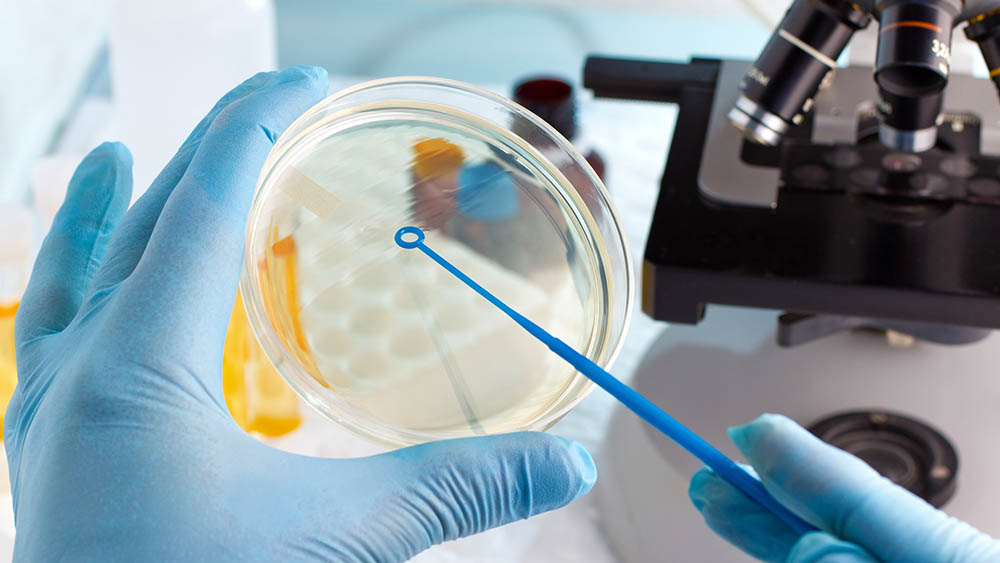
Leaving research material on a workbench during vacation can ruin an experiment, right? Wrong—if we’re talking about English physician and microbiologist Alexander Fleming. While studying a substance capable of fighting bacteria in wounds, Fleming went on vacation and forgot about his experiment. Upon returning, he noticed the microorganisms were moldy. However, where the fungi were present, something seemed to inhibit the bacteria. From this accident came a second experiment. In the new study, Fleming discovered penicillin—the first antibiotic—responsible for saving thousands of people from infectious diseases.
Harry Coover Jr.
Widely used in crafts and small repairs, instant glue—also known as super glue—was another “accidental” discovery. During World War II, in 1945, American chemist Harry Coover Jr. set out to create a precision sight. He used “acrylate” but abandoned the chemical because it was too sticky. Six years later, his colleague Fred Joyner tried bonding two lenses with the material and found they could no longer be separated. Super glue was born.
Kikunae Ikeda
In 1908, in Japan, researcher Kikunae Ikeda, while savoring his dashi—a traditional Japanese broth made with kombu seaweed and bonito—noticed a taste that wasn’t salty, sweet, sour, or bitter. Curiosity took him to the lab to understand that sensation. After much research, he discovered that this taste was provided by glutamic acid, also present in other foods such as cheeses, tomatoes, meats, and mushrooms. He named the taste “umami,” which in Japanese means “savory.” In the 2000s, researchers at the University of Miami confirmed the existence of specific receptors for this taste on the taste buds, and umami came to be scientifically recognized as one of the five basic tastes of the human palate.
Martin Cooper
In an ever more connected world, it’s hard to imagine daily life without smartphones and their apps. Yet what many don’t know is that the pioneer of the mobile handset was American electrical engineer and designer Martin Cooper, inventor of the Motorola DynaTAC. Another curious tidbit: according to Cooper, his inspiration was Captain Kirk’s communicator in Star Trek.
UMAMI
It is the fifth basic taste of the human palate, discovered in 1908 by Japanese scientist Kikunae Ikeda. It was scientifically recognized in 2000, when researchers at the University of Miami verified the existence of specific receptors for this taste on the taste buds. The amino acid glutamic acid and the nucleotides inosinate and guanylate are the main umami substances. The two main characteristics of umami are increased salivation and the persistence of taste for a few minutes after eating. To learn more, visit www.portalumami.com.br and follow on facebook.com/ogostoumami and instagram.com/ogostoumami.
Meet 5 researchers who changed your life—and you didn’t even know it
-
Telephone
+55 (11) 3165-9595 / 91665-8665
-
Email
umami@fsb.com.br
Related news

- Notícia
Less Salt, More Umami: Try Flavorful Recipes with Reduced Sodium

- Notícia
Minas Gerais Cuisine: Chef Explains What Makes the Region’s Dishes So Flavorful

- Notícia
Golden August: the first strategic asset of our lives is breastfeeding.
- Notícia