
Learn to make a cheese-and-guava dessert for Valentine’s Day | Press
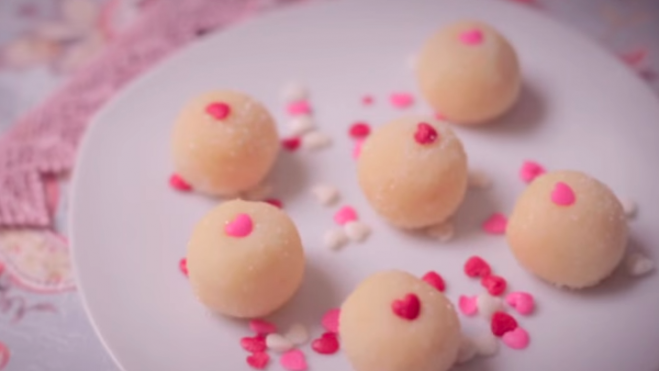
A special recipe by confectioner Jamille Andrez adds an umami touch to this celebratory date.
June 2018 – The most romantic day of the year is coming, and couples are already planning how to celebrate. For those who want to save money or prefer a more intimate moment, a special dinner at home can be the perfect choice to celebrate Valentine’s Day.
To make the day even sweeter and finish a meal for two on a high note, the tip is the perfect pairing of cheese and guava paste in this brigadeiro recipe by confectioner Jamille Andrez. Extremely flavorful, the union of cheese with guava paste is popularly known as Romeo and Juliet.
Easy to make and similar to the traditional sweet, the Romeo and Juliet brigadeiro delivers umami—the fifth basic taste of the human palate, discovered in 1908 by Japanese scientist Kikunae Ikeda—by combining cheese with guava paste. To make the recipe even more umami, you can replace the cream cheese with a thin piece of Parmesan.
Take note and surprise your loved one on this special day!
ROMEO AND JULIET BRIGADEIRO
Ingredients
- 1 can sweetened condensed milk (395 g)
- 150 g cream cheese
- 30 g unsalted butter
- 2 tbsp milk
- 150 g guava paste, cut into small cubes
- Granulated sugar for rolling
Method
- Place the condensed milk, cream cheese, butter, and milk in a saucepan and cook over high heat, stirring occasionally, for about 8 minutes, or until the mixture pulls away from the bottom.
- Transfer to a bowl, cover with plastic wrap, and refrigerate for at least 6 hours.
- Scoop small portions of the dough, place a cube of guava paste in the center, and roll into balls. Coat in granulated sugar and serve immediately.
- Tip: cream cheese can be replaced with Parmesan cheese.
Yield: 20 brigadeiros
Prep time: 35 minutes (+ 6 hours chilling)
UMAMI
It is the fifth basic taste of the human palate, discovered in 1908 by Japanese scientist Kikunae Ikeda. It was scientifically recognized in 2000, when researchers at the University of Miami confirmed the existence of specific receptors for this taste on the taste buds. The amino acid glutamic acid and the nucleotides inosinate and guanylate are the main umami substances. Two main characteristics of umami are increased salivation and the lingering of taste for a few minutes after eating. To learn more, visit www.portalumami.com.br and follow facebook.com/ogostoumami and instagram.com/ogostoumami.
Learn to make a cheese-and-guava dessert for Valentine’s Day | Press
-
Telephone
+55 (11) 3165-9595 / 91665-8665
-
Email
umami@fsb.com.br
Related news
- Notícia
Less Salt, More Umami: Try Flavorful Recipes with Reduced Sodium
- Notícia
Minas Gerais Cuisine: Chef Explains What Makes the Region’s Dishes So Flavorful

- Notícia
Golden August: the first strategic asset of our lives is breastfeeding.
- Notícia