
Is Airplane Food Bad? Try an Umami Menu | Press
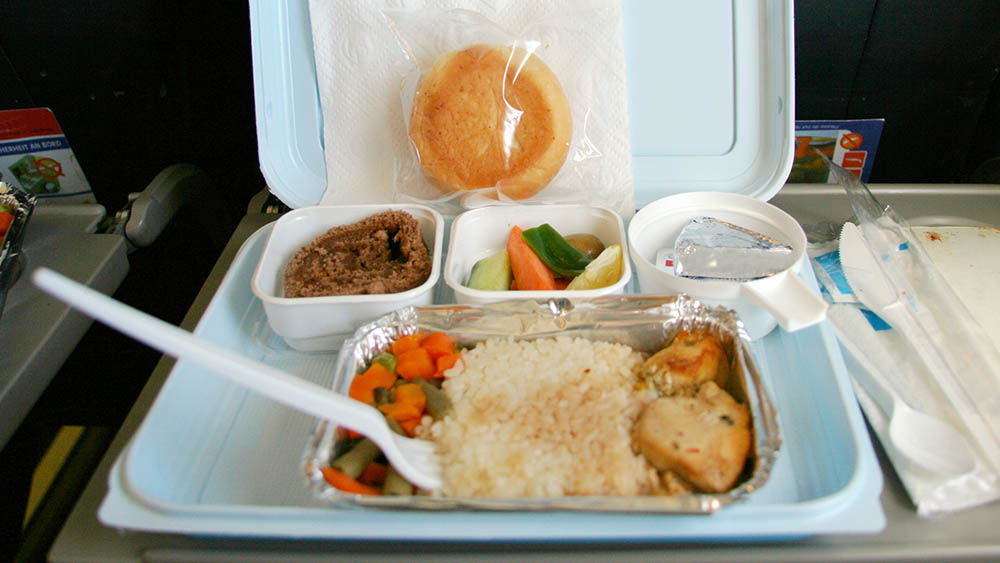
Taste perceptions can be altered during flights due to noise, pressure changes, or even fear.
São Paulo, December 2017 – Meals served on airplanes used to be widely criticized, as maintaining high culinary standards and food safety ten thousand meters above ground was a major challenge. Today, however, these issues can be minimized by tailoring the in-flight menu, since the key lies in advances in preservation and flavor technologies, which revolve mainly around how each food’s taste is perceived.
In an interview with the BBC, Charles Spence, professor of experimental psychology at Oxford University, reported that several elements involved in the flying experience can reduce appetite and taste perception. Among them are engine noise, cabin pressurization, low humidity, or—most often—psychological factors such as fear or anxiety. “To ease the discomforts, you should adapt to the noise by putting on pleasant music through your headphones and also work on your psychological state, which often heightens the sensation of dry mouth. Right after that, enjoy your preferred snack or meal while staying well hydrated,” says Hellen Maluly, PhD in Food Science from Unicamp.
Studies examining how noise interferes with certain sensations suggest that sweet and salty tastes tend to decrease in the presence of louder noise. “The big differentiator is umami, one of the five basic tastes, which appears to be immune to these conditions. That’s why the best bet is to create a menu rich in the fifth taste—think tomatoes, cheeses, and mushrooms, for example,” the specialist points out.
Because pressurization and low humidity directly affect sensitivity to salty and sweet tastes, airlines often modify recipes by adding more salt and spices. “We’re in a time when sodium should be reduced, and incorporating umami is even more compelling. Besides the hypothesis that this taste isn’t affected, it tends to enhance the overall perception of food,” Hellen adds. This way, chefs can design lower-sodium recipes without sacrificing flavor. In addition, umami stimulates salivation and reduces the dry-mouth sensation common during flights.
UMAMI
It is the fifth basic taste of the human palate, discovered in 1908 by Japanese scientist Kikunae Ikeda. It was scientifically recognized in 2000, when researchers at the University of Miami confirmed the existence of specific receptors for this taste on the taste buds. The amino acid glutamic acid and the nucleotides inosinate and guanylate are the main umami substances. Two hallmark characteristics of umami are increased salivation and a lingering taste for a few minutes after eating. To learn more, visit portalumami.com.br and follow on social media at facebook.com/GostoUmami and instagram.com/ogostoumami.
Is Airplane Food Bad? Try an Umami Menu | Press
-
Telephone
+55 (11) 3165-9595 / 91665-8665
-
Email
umami@fsb.com.br
Related news

- Notícia
Minas Gerais Cuisine: Chef Explains What Makes the Region’s Dishes So Flavorful

- Notícia
Golden August: the first strategic asset of our lives is breastfeeding.

- Notícia
Easter Sunday: check out five recipes that will awaken the umami taste on this special date

- Notícia